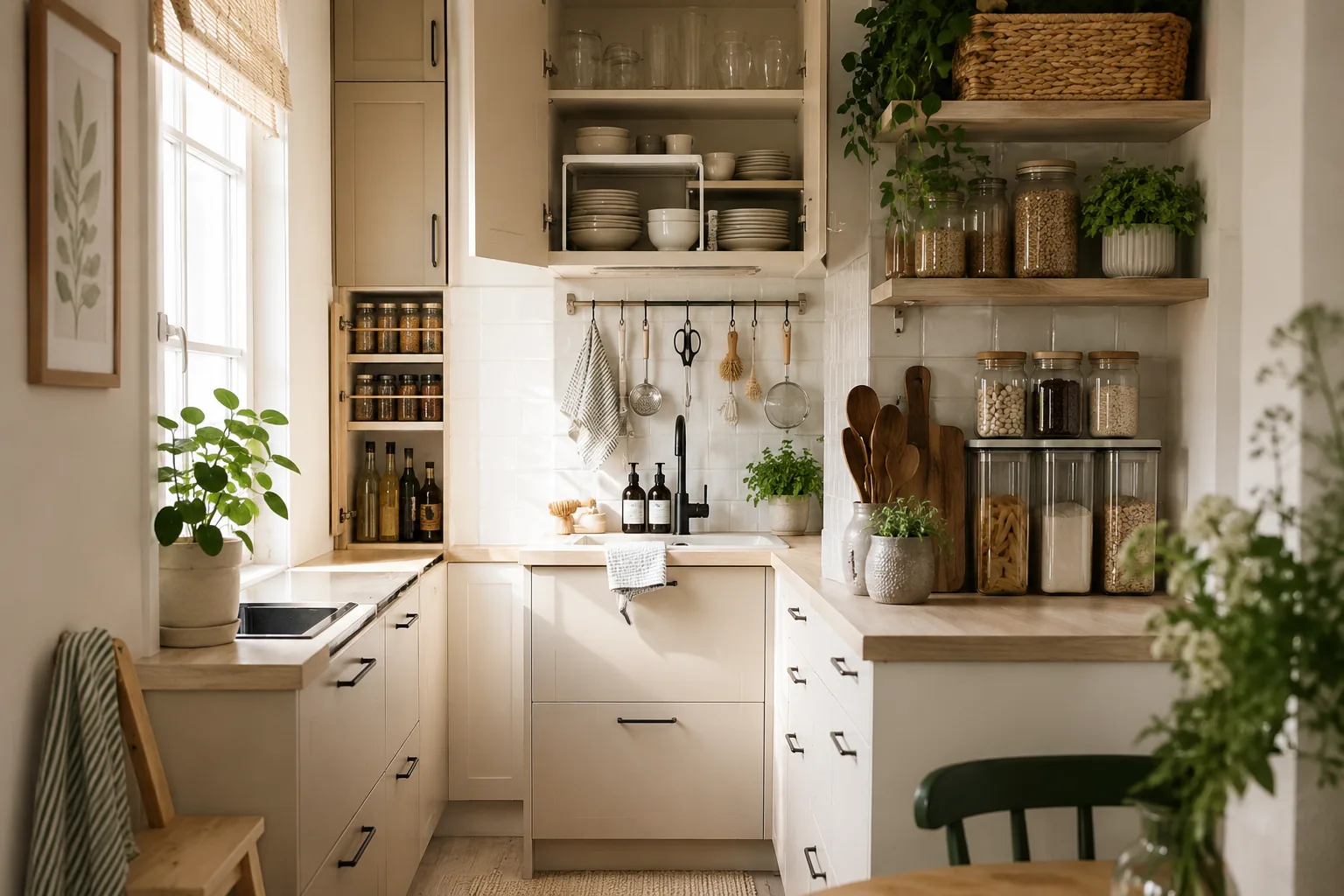
A practical, low-cost plan for making pantry shelves easier to see, reach, and reset using what you already own first.
Begin with the idea that solves the most noticeable daily frustration. Use containers you already own to test the layout, measure before buying anything, and keep only the changes that are easy to reset.
Empty one shelf—not the whole pantry
Work one shelf at a time so the project stays manageable. Remove expired food, combine open duplicates when it is safe to do so, and return only items that belong in that zone.
Why it works
A small scope gives you a finished result quickly and keeps food visible while you work.
Best for
Busy households or pantries that feel too overwhelming to tackle at once.
Small-space tip
Keep a box nearby for unopened food you will not use and can donate locally.
Group food by the way you cook
Create broad zones such as breakfast, quick meals, baking, snacks, and dinner staples. Use your real routines instead of copying labels that do not match how you eat.
Why it works
You can find a complete meal category without scanning every shelf.
Best for
Shared kitchens and shelves holding several kinds of food.
Small-space tip
Start with just four or five categories; tiny categories create more upkeep.
Reuse boxes as temporary bins
Trim sturdy delivery or food boxes to test where a bin would help. Cover a rough edge with paper tape and label the front; replace it later only if the system proves useful.
Why it works
A free trial shows the right dimensions before you spend money on containers.
Best for
Packets, snack bars, baking supplies, and other loose items.
Small-space tip
Avoid reusing boxes that are greasy, damp, or difficult to clean.
Put everyday items between waist and eye level
Reserve the easiest shelves for foods you reach for most. Move occasional appliances, bulk refills, and special-event ingredients higher or lower.
Why it works
Prime shelf space supports daily routines and reduces searching.
Best for
Narrow pantries where items tend to disappear behind one another.
Small-space tip
Place heavier items below shoulder height so they are safer to lift.
Create a use-first basket
Give open packages and foods nearing their date one visible spot. Check it when planning snacks or meals instead of letting half-used items drift to the back.
Why it works
A single visual cue makes it easier to use what is already open.
Best for
Households that frequently discover duplicate or forgotten packages.
Small-space tip
Keep the basket small enough to review at a glance.
Raise the back row with what you have
A stable, wipeable box or spare shelf insert can lift cans and jars in the back row. Test that everything sits securely and that the shelf can support the weight.
Why it works
Tiered height makes labels visible without buying matching containers.
Best for
Deep shelves holding short cans, jars, or spices.
Small-space tip
Do not stack makeshift risers or use anything that bends under weight.
Label the shelf before the container
A small removable label on the shelf edge defines the zone without requiring every package to be decanted. It also helps everyone return groceries to the same place.
Why it works
The system remains flexible when package sizes and brands change.
Best for
Rental kitchens and anyone avoiding a large container purchase.
Small-space tip
Use plain language everyone in the household recognizes.
Keep a short restock note nearby
Use a paper list or phone note for staples as they run low. A quick inventory before shopping reduces accidental duplicates and protects the space you have organized.
Why it works
Buying with a plan prevents crowded shelves from returning.
Best for
Small pantries with little room for backup stock.
Small-space tip
Choose a maximum backup quantity for the few staples you use most.