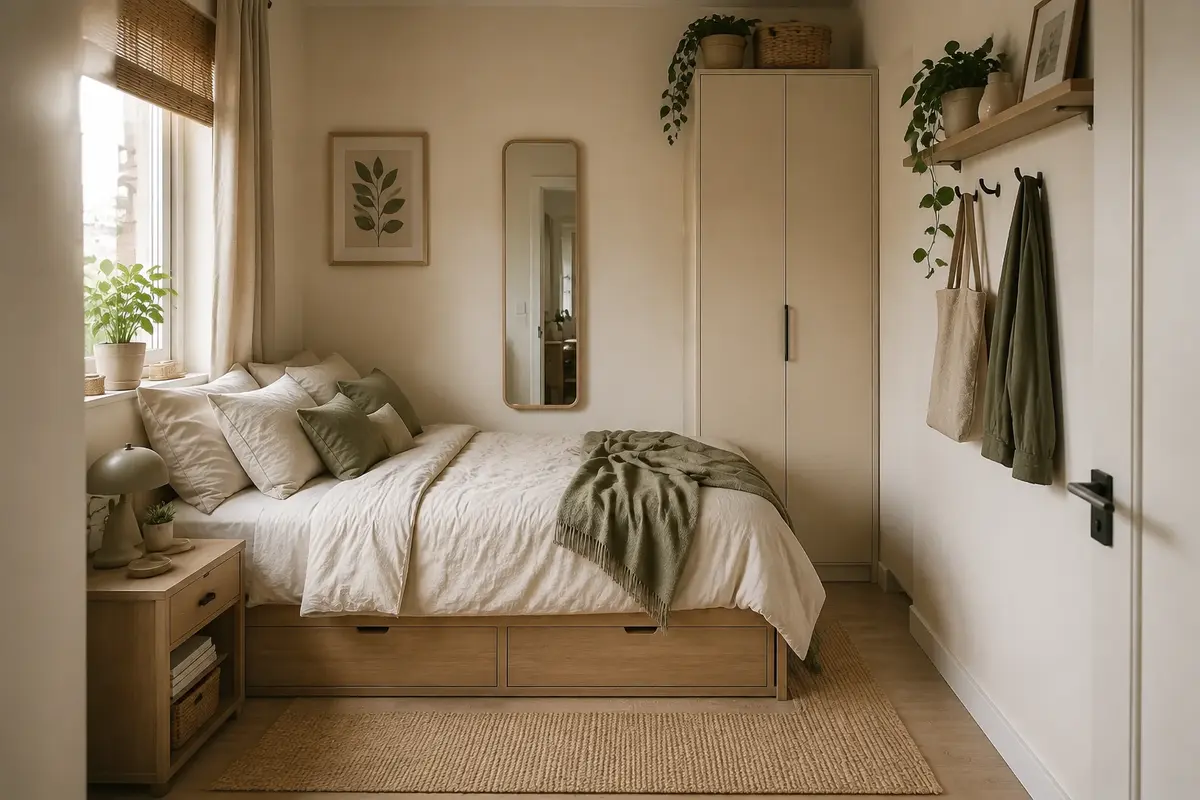
A small bedroom has to support sleep, dressing, and storage without feeling like a stockroom. The most useful changes protect the walking path first, then use hidden and vertical space for the things that do not need to stay visible.
Work through one storage zone at a time. Measure the available clearance, test categories with containers you already own, and leave enough breathing room for the system to be easy to reset.
Protect the walking path first
Before adding storage, mark the route from the door to the bed, wardrobe, and window. Move baskets, stools, and laundry off that route so the room is easier to use in low light and on busy mornings.
Why it works
A clear path makes the whole room feel more spacious and keeps storage from becoming an obstacle.
Best for
Bedrooms where furniture leaves only a narrow aisle.
Small-space tip
Use painter's tape to test the footprint of any new furniture before bringing it home.
Divide under-bed space into simple zones
Use shallow containers for categories such as spare linens, seasonal clothing, or occasional accessories. Avoid mixing unrelated loose items in one large bin.
Why it works
Defined categories make hidden storage easier to retrieve without emptying everything.
Best for
Beds with consistent clearance and items needed monthly or seasonally.
Small-space tip
Label the short end of each container so you can identify it before pulling it out.
Reserve the wardrobe's easiest area for daily clothes
Place frequently worn pieces between waist and eye level. Move formalwear, off-season clothing, and backups to higher shelves or less convenient sections.
Why it works
Prime storage supports the routine that happens every day.
Best for
Small wardrobes where clothing is tightly packed.
Small-space tip
Leave a little open rail space so hangers can slide and clothing can return easily.
Choose a bedside table that contains clutter
Give glasses, medication, charging cables, and reading material a small drawer, shelf, or tray. Keep the top limited to the items needed at night.
Why it works
A contained bedside zone prevents small essentials from spreading across the room.
Best for
Bedrooms with no room for a wide nightstand.
Small-space tip
Measure the distance between the bed and wall before choosing a narrow table or shelf.
Use one high shelf for low-frequency items
A shelf above a dresser or door can hold light, contained items that are not needed daily. Keep the display edited and avoid anything difficult to lift safely.
Why it works
It uses wall height without taking away floor space.
Best for
Rooms with clear wall area but limited furniture capacity.
Small-space tip
Use secure wall fixings suited to the wall and keep heavy objects at a lower level.
Give tomorrow's clothes one landing place
Choose a hook, valet rail, or small section of a chair for clothes prepared for the next day. Keep it separate from clothing that needs washing or returning to the closet.
Why it works
One intentional landing zone stops clothing from spreading across several surfaces.
Best for
Anyone who plans outfits or changes clothes more than once a day.
Small-space tip
Limit the zone to one outfit so it does not become another storage pile.
File sturdy clothing vertically in drawers
Fold T-shirts, sleepwear, and leggings into rows so each piece remains visible. Adjust the fold to the drawer height rather than forcing a perfect method.
Why it works
Vertical rows let you remove one item without disturbing a stack.
Best for
Deep drawers holding soft, frequently used clothing.
Small-space tip
Leave enough space for your hand to return an item without compressing the row.
End the day with a two-minute reset
Return loose clothing, clear the bedside surface, and place laundry in its hamper. Stop when the main visual clutter is contained.
Why it works
A short repeatable routine prevents small piles from becoming a full-room project.
Best for
Bedrooms that collect clothing and small personal items during the week.
Small-space tip
Attach the reset to an existing habit such as plugging in your phone or closing the curtains.