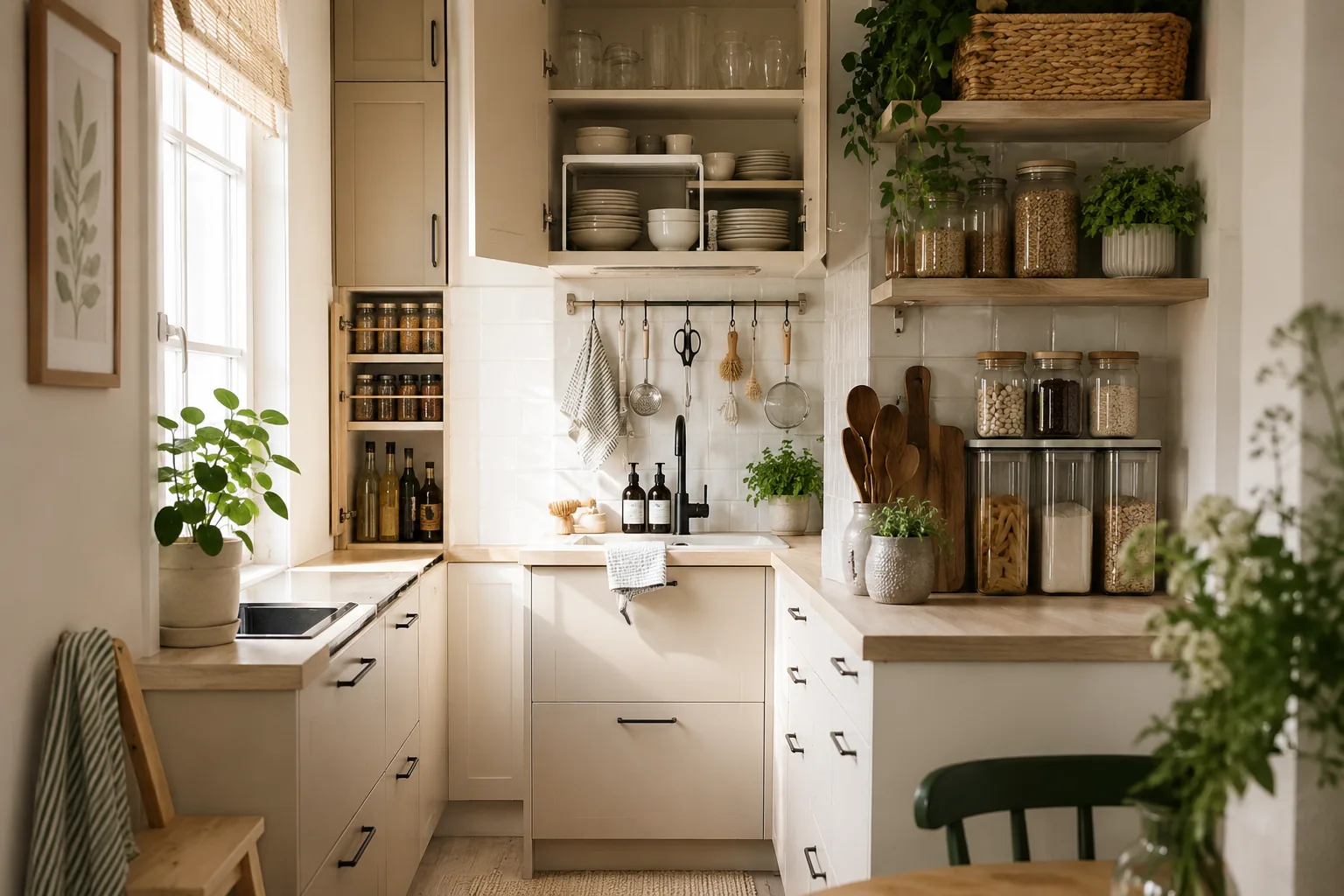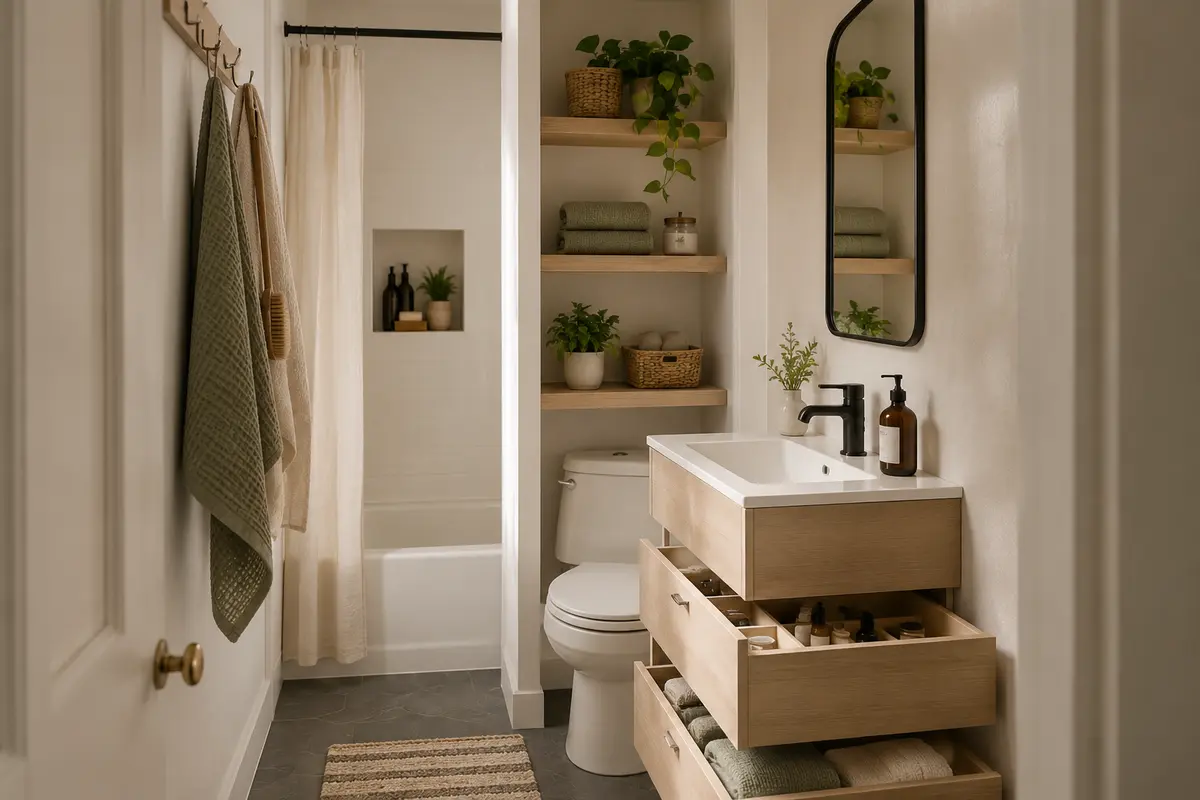
Small bathrooms need storage that works around plumbing, moisture, doors, and daily routines. A useful solution gives one category a safer, more accessible home; the wrong one can block a fixture, trap dampness, or create another crowded surface.
Use this guide to compare ten common bathroom storage formats before choosing one. For a broader room plan, read Small Bathroom Organization Ideas or explore the Bathroom Organization room page.
At a glance
Quick Comparison: Which Storage Solution Fits Your Problem?
Use this overview to narrow the list, then open the full guidance for the options that suit your space.
| Storage solution | Best for | Measure first | Installation |
|---|---|---|---|
| Under-sink organizers | Vanity cabinets with usable space beside or below the pipes and categories that… | Measure the clear interior width, depth, and height with the doors closed. | None or light assembly |
| Over-toilet storage | Bathrooms with clear vertical space above the toilet and enough side and front… | Measure floor width around the toilet, tank width and height, wall-to-toilet… | Assembly and secure anchoring |
| Mirrored medicine cabinets | Sink areas where a mirror is already needed and the wall can safely support a… | Measure available wall width and height, faucet and backsplash clearance, door… | Professional installation may help |
| Floating shelves | Dry wall areas above a hamper, beside a vanity, or on another clear surface where… | Measure clear wall width, shelf depth, comfortable reach, and the projection into… | Wall fixing required |
| Slim rolling carts | Straight gaps beside a vanity or at the end of a fixture where the cart can pull… | Measure the gap at its narrowest point, including baseboards and projecting… | Light assembly |
| Shower and bath organizers | Showers and baths with a stable mounting point away from direct interference with… | Measure the available wall or corner area, bottle height and pump clearance,… | Varies by mounting method |
| Over-door storage | Bathroom or linen-closet doors with sufficient top and rear clearance and a full… | Measure door thickness and width, the gap above it, usable hanging height, and… | Hang or lightly secure |
| Tall narrow bathroom cabinets | A dry, unused wall strip with a level floor, a clear opening path, and room to… | Measure the narrowest wall width, ceiling height, cabinet depth, baseboards,… | Assembly and anti-tip anchoring |
| Drawer organizers | Drawers holding several small categories that are used regularly and can be… | Measure the internal width, depth, and usable height rather than the drawer front. | Usually none |
| Wall-mounted baskets, hooks and vertical storage | Frequently used lightweight items placed on a suitable dry wall near—but not in… | Measure clear wall width and height, comfortable reach, basket projection, and… | Wall fixing usually required |
Make this guide manageable
Turn this guide
into a plan.
Choose one problem and the time you have today. We’ll create a short, practical plan and remember your progress on this device.
Under-sink organizers

- Best for
- Vanity cabinets with usable space beside or below the pipes and categories that currently disappear at the back.
- Measure
- Measure the clear interior width, depth, and height with the doors closed. Mark the exact position of the trap, valves, supply lines, hinges, drawer rails, and any point that must remain accessible.
- Avoid when
- Avoid systems that hide moisture, block shutoff valves, or press against plumbing. This may also be the wrong place for medicines or hazardous cleaners when heat, humidity, children, or pets are concerns.
Read the full decision guide
- The problem it solves
- They turn the irregular space around plumbing into reachable zones for cleaning supplies, spare toiletries, or hair tools while keeping the cabinet easier to empty for maintenance.
- Best for
- Vanity cabinets with usable space beside or below the pipes and categories that currently disappear at the back.
- Measure before choosing
- Measure the clear interior width, depth, and height with the doors closed. Mark the exact position of the trap, valves, supply lines, hinges, drawer rails, and any point that must remain accessible.
- What to look for
- Adjustable shelves, removable trays, water-resistant materials, non-slip feet, pull-outs with stops, and a layout that can be lifted out quickly if a leak occurs.
- When to skip it
- Avoid systems that hide moisture, block shutoff valves, or press against plumbing. This may also be the wrong place for medicines or hazardous cleaners when heat, humidity, children, or pets are concerns.
Over-toilet storage

- Best for
- Bathrooms with clear vertical space above the toilet and enough side and front clearance to use and maintain the fixture comfortably.
- Measure
- Measure floor width around the toilet, tank width and height, wall-to-toilet depth, ceiling height, and the location of the flush control, water valve, window, vent, and access panel.
- Avoid when
- Skip unstable ladder-style units, heavy objects overhead, or any design that obstructs maintenance. It may not fit wall-mounted toilets, sloped ceilings, windows, or very narrow clearances.
Read the full decision guide
- The problem it solves
- A freestanding unit or securely mounted shelf uses wall height above the toilet for towels, paper supplies, or contained backups without taking another patch of floor.
- Best for
- Bathrooms with clear vertical space above the toilet and enough side and front clearance to use and maintain the fixture comfortably.
- Measure before choosing
- Measure floor width around the toilet, tank width and height, wall-to-toilet depth, ceiling height, and the location of the flush control, water valve, window, vent, and access panel.
- What to look for
- A stable or anchored frame, moisture-resistant finish, adjustable shelves, wipeable surfaces, raised edges, and enough open space to reach the tank and valve.
- When to skip it
- Skip unstable ladder-style units, heavy objects overhead, or any design that obstructs maintenance. It may not fit wall-mounted toilets, sloped ceilings, windows, or very narrow clearances.
Mirrored medicine cabinets

- Best for
- Sink areas where a mirror is already needed and the wall can safely support a surface-mounted or recessed cabinet at a comfortable height.
- Measure
- Measure available wall width and height, faucet and backsplash clearance, door swing, user sightlines, and nearby lights or outlets. For recessed models, verify the wall cavity, studs, pipes, wiring, and required depth before choosing one.
- Avoid when
- Recessed cabinets are unsuitable where utilities or structural framing occupy the cavity. A deep surface-mounted cabinet can feel intrusive or interfere with lighting, faucets, and tall users.
Read the full decision guide
- The problem it solves
- A shallow cabinet combines a mirror with concealed storage for small daily items, reducing visual clutter around the sink without requiring another wall surface.
- Best for
- Sink areas where a mirror is already needed and the wall can safely support a surface-mounted or recessed cabinet at a comfortable height.
- Measure before choosing
- Measure available wall width and height, faucet and backsplash clearance, door swing, user sightlines, and nearby lights or outlets. For recessed models, verify the wall cavity, studs, pipes, wiring, and required depth before choosing one.
- What to look for
- Moisture-resistant construction, adjustable shelves, smooth hinges, a door that opens in the useful direction, contained edges, and safe installation hardware suited to the wall.
- When to skip it
- Recessed cabinets are unsuitable where utilities or structural framing occupy the cavity. A deep surface-mounted cabinet can feel intrusive or interfere with lighting, faucets, and tall users.
Floating shelves

- Best for
- Dry wall areas above a hamper, beside a vanity, or on another clear surface where stored items remain visible and comfortably reachable.
- Measure
- Measure clear wall width, shelf depth, comfortable reach, and the projection into the room. Locate studs, pipes, wiring, switches, door swings, shower spray, and towel movement before deciding the position.
- Avoid when
- Avoid heavy items overhead, direct splash zones, unsuitable walls, and shelves that project into a tight walkway. Open storage can also make mixed toiletries look more crowded.
Read the full decision guide
- The problem it solves
- Shallow shelves use open wall space for folded towels, baskets, or frequently used toiletries while keeping the floor and vanity clear.
- Best for
- Dry wall areas above a hamper, beside a vanity, or on another clear surface where stored items remain visible and comfortably reachable.
- Measure before choosing
- Measure clear wall width, shelf depth, comfortable reach, and the projection into the room. Locate studs, pipes, wiring, switches, door swings, shower spray, and towel movement before deciding the position.
- What to look for
- Moisture-resistant material, appropriate wall fixings and load rating, a shallow profile, raised edges where useful, and enough spacing to clean and remove the contents.
- When to skip it
- Avoid heavy items overhead, direct splash zones, unsuitable walls, and shelves that project into a tight walkway. Open storage can also make mixed toiletries look more crowded.
Slim rolling carts

- Best for
- Straight gaps beside a vanity or at the end of a fixture where the cart can pull out without blocking the toilet, shower, door, or main walking path.
- Measure
- Measure the gap at its narrowest point, including baseboards and projecting handles. Record usable height and depth, the cart's pulled-out footprint, floor level, and every nearby door, drawer, or shower-screen swing.
- Avoid when
- Skip carts that block circulation, tip when loaded, or roll poorly over thresholds and bath mats. Closed or absorbent materials are a poor choice in frequent splash zones.
Read the full decision guide
- The problem it solves
- A narrow movable cart converts a genuine gap into tiered storage for towels, toilet paper, or daily supplies and can roll aside when access or cleaning is needed.
- Best for
- Straight gaps beside a vanity or at the end of a fixture where the cart can pull out without blocking the toilet, shower, door, or main walking path.
- Measure before choosing
- Measure the gap at its narrowest point, including baseboards and projecting handles. Record usable height and depth, the cart's pulled-out footprint, floor level, and every nearby door, drawer, or shower-screen swing.
- What to look for
- Rust-resistant materials, raised shelf edges, washable surfaces, stable construction, a useful handle, smooth lockable wheels, and open ventilation for damp items.
- When to skip it
- Skip carts that block circulation, tip when loaded, or roll poorly over thresholds and bath mats. Closed or absorbent materials are a poor choice in frequent splash zones.
Shower and bath organizers

- Best for
- Showers and baths with a stable mounting point away from direct interference with controls, doors, curtains, grab bars, and the user's standing area.
- Measure
- Measure the available wall or corner area, bottle height and pump clearance, showerhead pipe or door thickness if used, and the distance from spray, controls, and the floor. Check the mounting surface and grout lines.
- Avoid when
- Suction systems may fail on textured tile or grout, and hanging caddies can stress fixtures or swing. Avoid designs that obstruct grab bars, controls, drainage, or safe footing.
Read the full decision guide
- The problem it solves
- A caddy, corner shelf, or wall-mounted holder keeps bottles and bathing tools off the floor and tub edge so surfaces drain, remain reachable, and clean more easily.
- Best for
- Showers and baths with a stable mounting point away from direct interference with controls, doors, curtains, grab bars, and the user's standing area.
- Measure before choosing
- Measure the available wall or corner area, bottle height and pump clearance, showerhead pipe or door thickness if used, and the distance from spray, controls, and the floor. Check the mounting surface and grout lines.
- What to look for
- Fast drainage, rust-resistant construction, secure mounting, open shelves, raised rails, removable parts for cleaning, and enough spacing for the bottles actually used.
- When to skip it
- Suction systems may fail on textured tile or grout, and hanging caddies can stress fixtures or swing. Avoid designs that obstruct grab bars, controls, drainage, or safe footing.
Over-door storage

- Best for
- Bathroom or linen-closet doors with sufficient top and rear clearance and a full swing that remains accessible from inside the room.
- Measure
- Measure door thickness and width, the gap above it, usable hanging height, and clearance from walls, trim, fixtures, hooks, and towels throughout the full door swing.
- Avoid when
- Avoid fire-rated doors, doors that already drag, and loads that make the door swing or rattle. It will not help if stored items prevent the door from opening fully or drying properly.
Read the full decision guide
- The problem it solves
- Hooks or a shallow rack use the back of a suitable door for towels, robes, grooming tools, or lightweight backups without using floor or cabinet space.
- Best for
- Bathroom or linen-closet doors with sufficient top and rear clearance and a full swing that remains accessible from inside the room.
- Measure before choosing
- Measure door thickness and width, the gap above it, usable hanging height, and clearance from walls, trim, fixtures, hooks, and towels throughout the full door swing.
- What to look for
- Padded hooks, rust-resistant materials, a shallow profile, secure lower anchors, smooth edges, and spacing that allows damp textiles to hang without bunching.
- When to skip it
- Avoid fire-rated doors, doors that already drag, and loads that make the door swing or rattle. It will not help if stored items prevent the door from opening fully or drying properly.
Tall narrow bathroom cabinets

- Best for
- A dry, unused wall strip with a level floor, a clear opening path, and room to anchor the cabinet without crowding a fixture.
- Measure
- Measure the narrowest wall width, ceiling height, cabinet depth, baseboards, outlets, vents, and the full opening depth of doors or drawers. Check clearance from the toilet, shower, sink, and room door.
- Avoid when
- Tall furniture is unsafe without suitable anchoring. Skip it where humidity is uncontrolled, the floor is uneven, or the cabinet would restrict cleaning, ventilation, or comfortable fixture use.
Read the full decision guide
- The problem it solves
- A slim tower uses vertical space for towels and contained supplies while requiring less floor width than a dresser-style cabinet.
- Best for
- A dry, unused wall strip with a level floor, a clear opening path, and room to anchor the cabinet without crowding a fixture.
- Measure before choosing
- Measure the narrowest wall width, ceiling height, cabinet depth, baseboards, outlets, vents, and the full opening depth of doors or drawers. Check clearance from the toilet, shower, sink, and room door.
- What to look for
- Anti-tip anchoring, moisture-resistant surfaces, adjustable shelves, ventilated sections, smooth doors or drawers, and closed lower storage for visual calm.
- When to skip it
- Tall furniture is unsafe without suitable anchoring. Skip it where humidity is uncontrolled, the floor is uneven, or the cabinet would restrict cleaning, ventilation, or comfortable fixture use.
Drawer organizers

- Best for
- Drawers holding several small categories that are used regularly and can be assigned stable, easy-to-reset zones.
- Measure
- Measure the internal width, depth, and usable height rather than the drawer front. Note tapered sides, rounded corners, screw heads, plumbing cutouts, and the tallest item when placed in its intended position.
- Avoid when
- Rigid inserts waste room in irregular drawers, while too many tiny sections create upkeep. Damp tools and products that may leak need washable containment rather than fabric dividers.
Read the full decision guide
- The problem it solves
- Dividers and trays keep small grooming items, cosmetics, hair accessories, and daily tools visible instead of overlapping or catching when the vanity drawer closes.
- Best for
- Drawers holding several small categories that are used regularly and can be assigned stable, easy-to-reset zones.
- Measure before choosing
- Measure the internal width, depth, and usable height rather than the drawer front. Note tapered sides, rounded corners, screw heads, plumbing cutouts, and the tallest item when placed in its intended position.
- What to look for
- Washable materials, non-slip feet, removable sections, rounded corners, adjustable compartments, and enough open space to lift and return each item easily.
- When to skip it
- Rigid inserts waste room in irregular drawers, while too many tiny sections create upkeep. Damp tools and products that may leak need washable containment rather than fabric dividers.
Wall-mounted baskets, hooks and vertical storage

- Best for
- Frequently used lightweight items placed on a suitable dry wall near—but not in the way of—the sink, shower, door, or walking path.
- Measure
- Measure clear wall width and height, comfortable reach, basket projection, and the path in front. Locate studs, pipes, wiring, tile joints, outlets, wet zones, grab bars, and door swings.
- Avoid when
- Avoid heavy loads, drilling into unknown plumbing or wiring zones, and installations that obstruct grab bars or project into circulation. Adhesive mounts may not suit textured, damp, or weak surfaces.
Read the full decision guide
- The problem it solves
- Hooks, rails, and shallow baskets move selected towels and daily items off counters and floors while keeping them visible near the routine they support.
- Best for
- Frequently used lightweight items placed on a suitable dry wall near—but not in the way of—the sink, shower, door, or walking path.
- Measure before choosing
- Measure clear wall width and height, comfortable reach, basket projection, and the path in front. Locate studs, pipes, wiring, tile joints, outlets, wet zones, grab bars, and door swings.
- What to look for
- Rust-resistant materials, verified load ratings, wall-appropriate fixings, flexible hook spacing, drainage where needed, smooth edges, and removable baskets for cleaning.
- When to skip it
- Avoid heavy loads, drilling into unknown plumbing or wiring zones, and installations that obstruct grab bars or project into circulation. Adhesive mounts may not suit textured, damp, or weak surfaces.
Measure first
How to Choose the Right Storage Solution for a Small Bathroom
Choose the smallest safe format that removes a repeated problem while protecting access, ventilation, cleaning, and comfortable movement. Before comparing options, use the complete storage measurement guide to map plumbing, openings, and usable clearance.
- Name one problem.Be exact: bottles crowd the shower floor, daily toiletries cover the sink, or spare towels have no dry, reachable home.
- Map the wet and access zones.Mark direct splash areas, ventilation, grab bars, shutoff valves, drains, outlets, and the space needed to use and clean each fixture.
- Measure the usable space.Record width, depth, and height at the narrowest points. Include pipes, hinges, baseboards, trim, handles, controls, and every door or drawer swing.
- Measure the contents.Check the tallest pump bottle, widest folded towel, or complete daily category so the solution fits what will actually live there.
- Test access and movement.Mark the footprint with boxes or painter's tape. Confirm that the storage stays easy to reach without narrowing the walking path or interfering with fixtures.
- Choose for moisture and safety.Prioritize rust resistance, drainage, washable surfaces, suitable fixings, stable construction, and a layout that allows leaks or dampness to be noticed quickly.
Ready to organize the whole room? Continue with Small Bathroom Organization Ideas.
One last check
Before You Buy Any Organizer
A promising format still needs to fit your real space and routine. Work through these checks before comparing any specific item.
- Identify the exact storage problem
- Declutter first
- Measure usable width, depth and height
- Check doors, hinges, pipes and other obstructions
- Check opening and movement clearance
- Decide whether installation is acceptable
- Compare the organizer's external dimensions with your usable space
Keep the full process nearby with How to Measure for Storage Organizers Before You Buy. If the space may simply be holding too much, start with How to Organize a Small Home Without Buying More Storage.