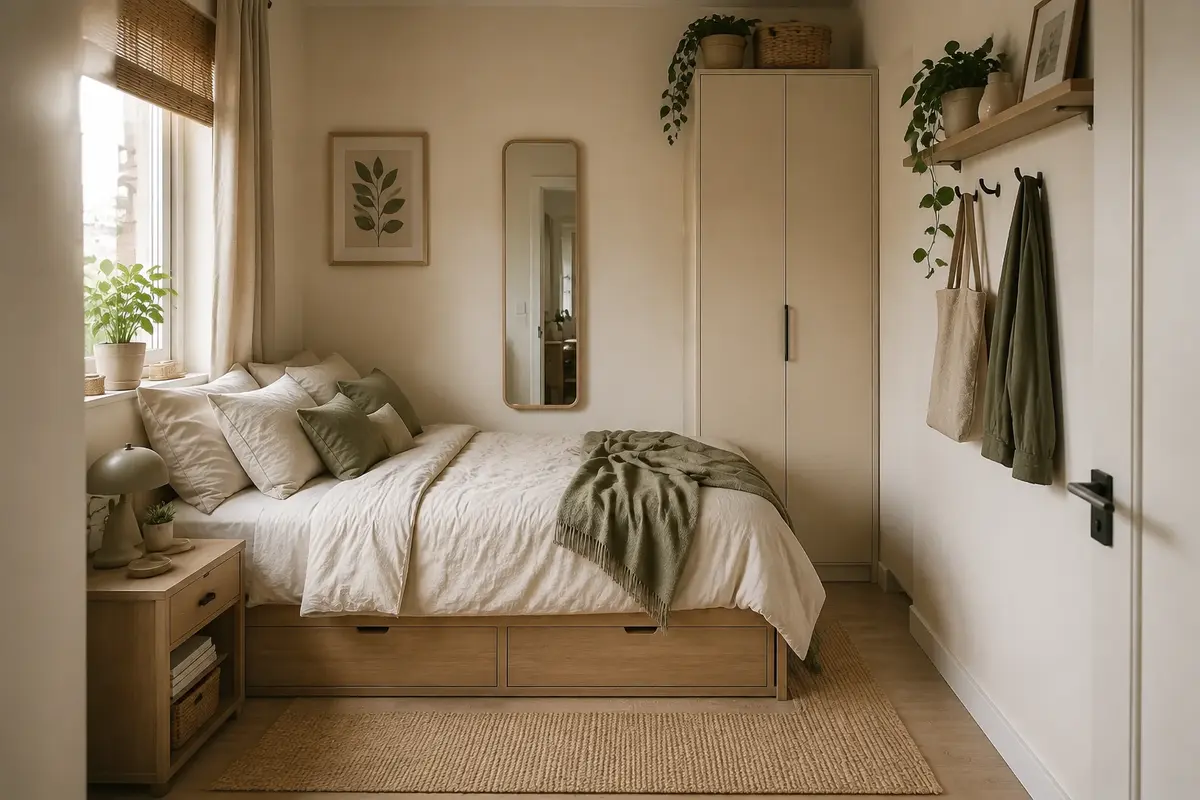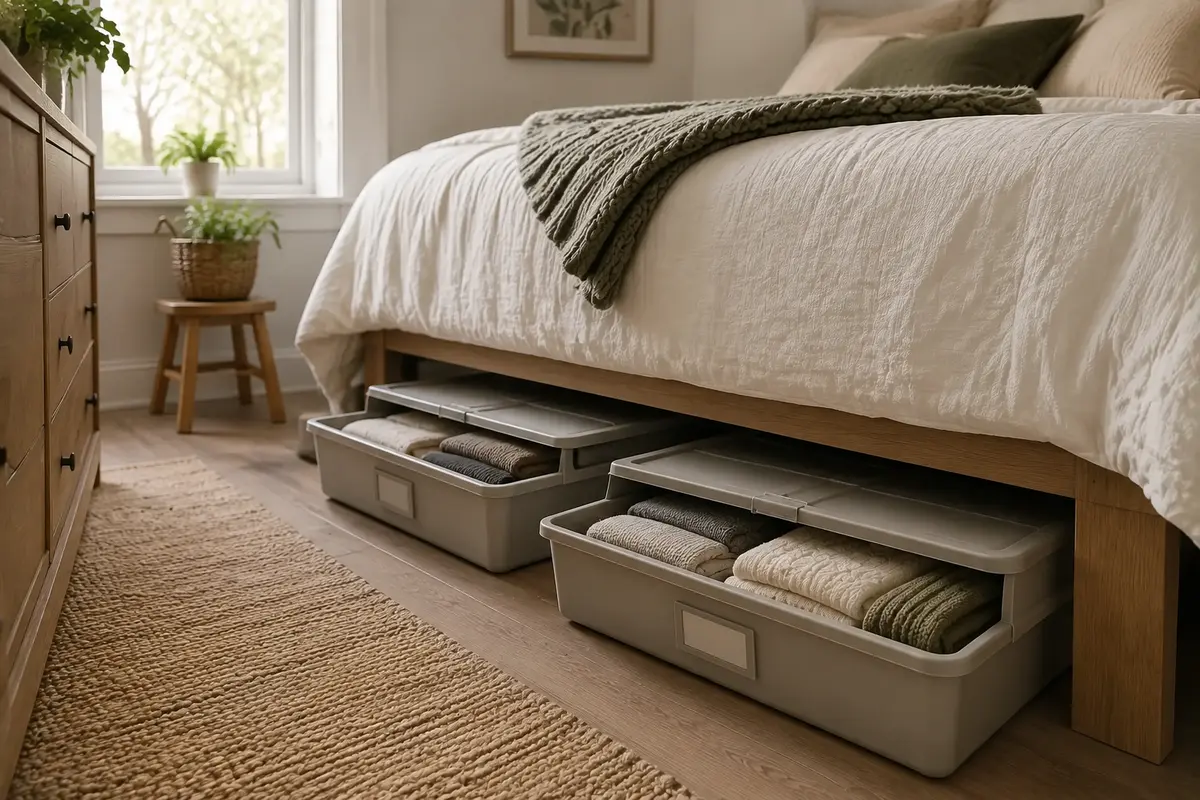
Under-bed storage is most useful when it behaves like a shallow drawer, not a place where forgotten belongings disappear. The right setup depends on the exact clearance, the bed supports, and how often you need the contents.
Choose a small number of defined categories, protect fabrics from dust and moisture, and make every container easy to pull out without lifting the bed.
Measure every part of the clearance
Measure from the floor to the lowest bed support in several places, not only at the edge. Note center legs, brackets, rugs, and any uneven floor area.
Why it works
The smallest clearance determines whether a container can slide all the way in.
Best for
Bed frames with center supports or low side rails.
Small-space tip
Allow extra height for a lid, handle, or soft container that bulges when full.
Choose containers by what they hold
Use structured lidded bins for items that need dust protection and flexible bags for awkward spaces or soft textiles. Avoid one container type simply for a matching look.
Why it works
The container protects the contents and matches how often they need to move.
Best for
Mixed categories such as linens, clothing, shoes, and keepsakes.
Small-space tip
Test one container before buying enough for the entire bed.
Keep each bin to one clear category
Separate spare bedding, seasonal clothing, craft supplies, or shoes rather than creating a general overflow bin. Broad labels are easier to maintain than many tiny sections.
Why it works
You can retrieve one category without searching through unrelated items.
Best for
Households using several bins beneath the same bed.
Small-space tip
Write the category on the end that faces the room.
Place frequent items near the easiest edge
Keep monthly-use items closest to the side you can access freely. Push true seasonal or archival categories toward the wall or head of the bed.
Why it works
Storage effort matches how often the item is needed.
Best for
Beds accessible from only one side or in a tight corner.
Small-space tip
Do not block the easiest bin with furniture that is difficult to move.
Protect clean textiles before storing
Wash and dry bedding or clothing completely, then place it in a clean container. Avoid packing fabrics tightly against a damp floor or an area with a known moisture problem.
Why it works
Clean, dry storage helps prevent odors and makes items ready to use later.
Best for
Seasonal linens, blankets, and clothing.
Small-space tip
Check the area periodically and follow the care instructions for delicate materials.
Use wheels or handles only when they help
Low wheels can help on a hard floor, while fabric handles may be easier on rugs. Check that hardware does not raise the container beyond the available clearance.
Why it works
The right retrieval method reduces lifting and scraping in a tight space.
Best for
Deep beds where containers need to travel farther.
Small-space tip
Pull the container from its designed handle rather than the lid.
Leave room to remove the lid
A container that fits under the bed may still be difficult to open. Choose a split lid, zipper top, or enough surrounding space to pull the bin out fully.
Why it works
Accessible openings keep the storage usable after the first setup.
Best for
Beds close to a wall or large furniture.
Small-space tip
Measure the floor space needed in front of the bed as well as the space underneath.
Review the space with the seasons
When rotating clothing or bedding, remove anything damaged, outgrown, or no longer used. Wipe the floor and containers before returning them.
Why it works
A scheduled review prevents hidden storage from becoming forgotten overflow.
Best for
Seasonal categories that naturally change two or three times a year.
Small-space tip
Add the review to the calendar when you store the current season away.