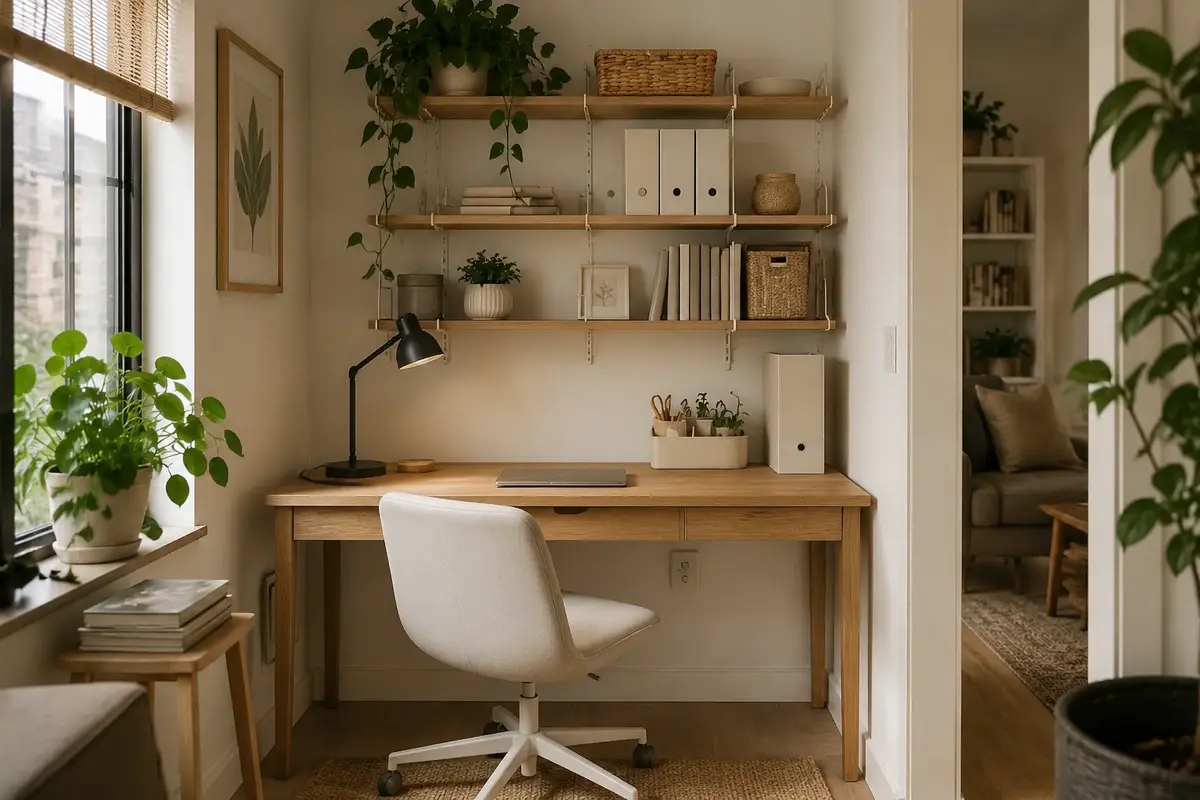
A small home office needs a clear boundary between active work, stored reference material, and household paperwork. When those categories mix, even a generous desk can feel crowded.
Build the workspace around the tasks you repeat most. Keep the surface ready for current work, move supplies upward or into one portable kit, and make shutting down the space a short daily action.
Keep the desktop for active work
Leave only the tools needed for the current kind of work on the main surface. Move backups, archives, and occasional equipment to shelves or closed storage.
Why it works
A clear work area reduces setup time and makes it easier to stop at the end of the day.
Best for
Narrow desks and work corners in shared rooms.
Small-space tip
Reserve one tray for the small items that must remain on the desk.
Move reference material upward
Use a shallow wall shelf or book ledge for notebooks, manuals, and a small number of current references. Keep the heaviest files within comfortable reach.
Why it works
Vertical storage frees the desk while keeping useful material visible.
Best for
Workspaces with wall area but little room for a bookcase.
Small-space tip
Leave space between categories so returning one book does not require rearranging the shelf.
Give cables one fixed route
Run power and charging cables along one desk edge or leg using suitable clips or a cable tray. Keep enough slack for devices to move without pulling.
Why it works
A predictable route prevents cords from spreading across the work surface and floor.
Best for
Desks used with a laptop, monitor, lamp, or several chargers.
Small-space tip
Label similar plugs near the power source before bundling them together.
Create one portable supply caddy
Collect pens, chargers, sticky notes, and other small tools in a handled container. Bring it out for work and return it to a shelf when the desk needs to serve another purpose.
Why it works
Frequently used supplies stay together without permanently occupying the surface.
Best for
Dining-table offices and workstations shared with household activities.
Small-space tip
Remove anything from the caddy that has not been used in the past month.
Separate incoming paper from filed paper
Use one shallow inbox for documents that still need action and a different location for completed records. Review the inbox on a regular day.
Why it works
A single decision point prevents unfinished paper from forming several piles.
Best for
Home offices that also receive household mail and forms.
Small-space tip
Keep the inbox small enough that it cannot become long-term storage.
Archive only what needs to stay
Move completed documents into a clearly named folder or file box, following any record-keeping requirements that apply to you. Recycle duplicates and nonessential drafts.
Why it works
The active workspace stays focused on current tasks instead of past projects.
Best for
Small offices with one drawer or compact filing area.
Small-space tip
Schedule a periodic review rather than buying another box whenever one fills.
Define where work pauses
Give unfinished notes, a laptop, or a current project one safe place when the desk must be cleared. Avoid scattering project materials across the room.
Why it works
A pause zone preserves progress while allowing the room to return to home mode.
Best for
Bedrooms, living rooms, and closets that contain a workstation.
Small-space tip
Use one folder or lidded tray sized to the project you handle most often.
Close the workspace with a three-step reset
Save and close your work, return loose supplies, and write the first task for tomorrow. Then switch off the task light or put away the portable kit.
Why it works
A visible ending helps the small workspace feel separate from the rest of the home.
Best for
Work corners that remain in view during personal time.
Small-space tip
Keep the reset under five minutes so it remains realistic on busy days.