Small apartments become difficult when one surface or corner is expected to handle every activity. Instead of organizing only by object type, define what each part of the home needs to help you do.
Keep pathways open, place storage near the routine it supports, and choose flexible pieces only when they solve more than one real problem.
Give each area one primary job
Define where you sleep, eat, work, relax, and arrive home—even if several zones share one room. Keep the objects for each activity closest to that zone.
Why it works
Clear purposes reduce the number of items drifting between surfaces.
Best for
Studios and apartments with open-plan living areas.
Small-space tip
Use a rug, lamp, shelf, or furniture direction to suggest a boundary without adding a wall.
Build a small landing zone by the entrance
Choose one hook, tray, and shoe area for the items that enter with you. Keep the setup on the natural path from the door.
Why it works
Keys, bags, mail, and shoes stop traveling into the rest of the apartment.
Best for
Homes that open directly into a kitchen or living room.
Small-space tip
Check the full door swing before adding hooks, benches, or baskets.
Use one wall all the way up
Concentrate tall shelving or cabinets on a suitable wall instead of adding many small storage pieces around the room. Keep daily items lower and light, occasional items higher.
Why it works
Vertical storage adds capacity while preserving more open floor area.
Best for
Rooms with limited floor space and one clear wall.
Small-space tip
Secure tall furniture appropriately and avoid placing heavy items overhead.
Choose furniture that solves two real needs
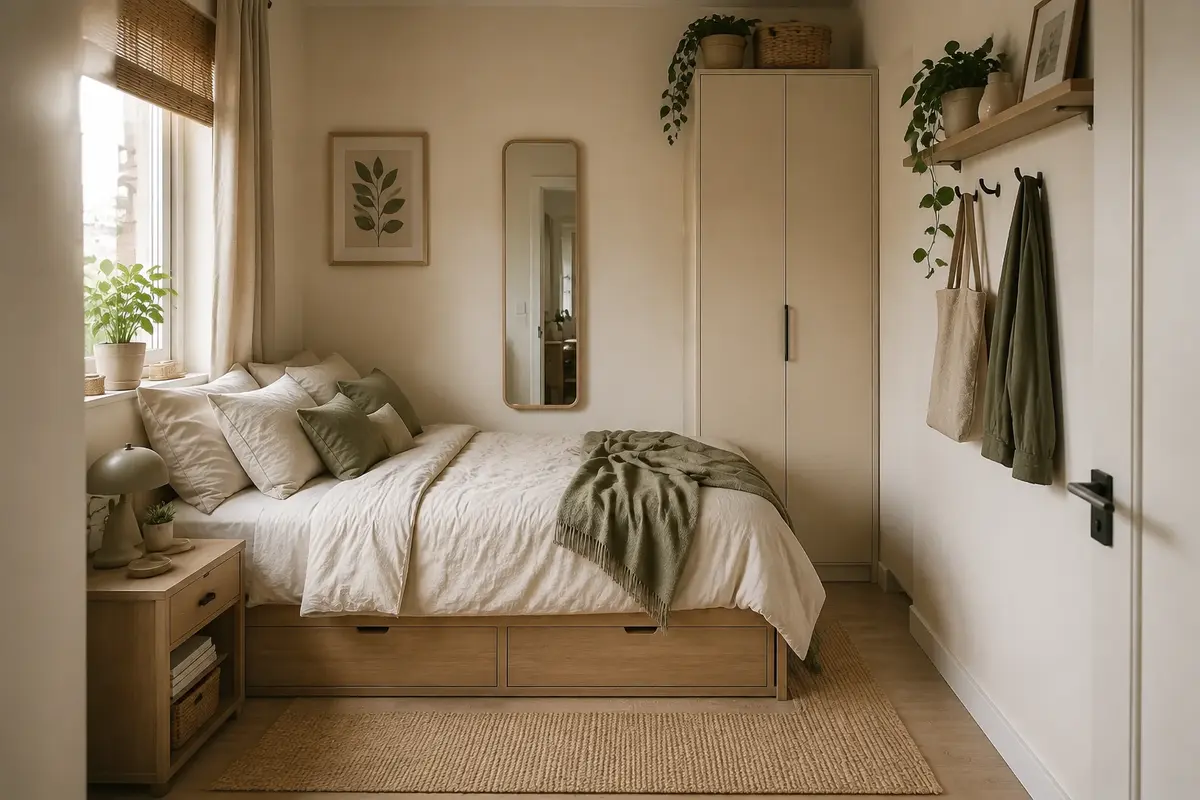
A storage bench, lift-top table, or bed with drawers can reduce the need for a separate piece. Only choose the feature if both functions fit your routine.
Why it works
One footprint can support seating, sleeping, working, or storage.
Best for
Apartments where every large piece affects the walking path.
Small-space tip
Measure the furniture both closed and fully open, including room for your body to use it.
Hide visual clutter near the main sightline
Use closed storage for mixed small items visible from the entrance or seating area. Keep attractive open shelves limited to categories that are easy to arrange.
Why it works
Reducing scattered shapes makes a multipurpose room feel calmer without removing useful belongings.
Best for
Studios where most of the home is visible at once.
Small-space tip
Do not fill every closed cabinet; leave space for items that need a quick home.
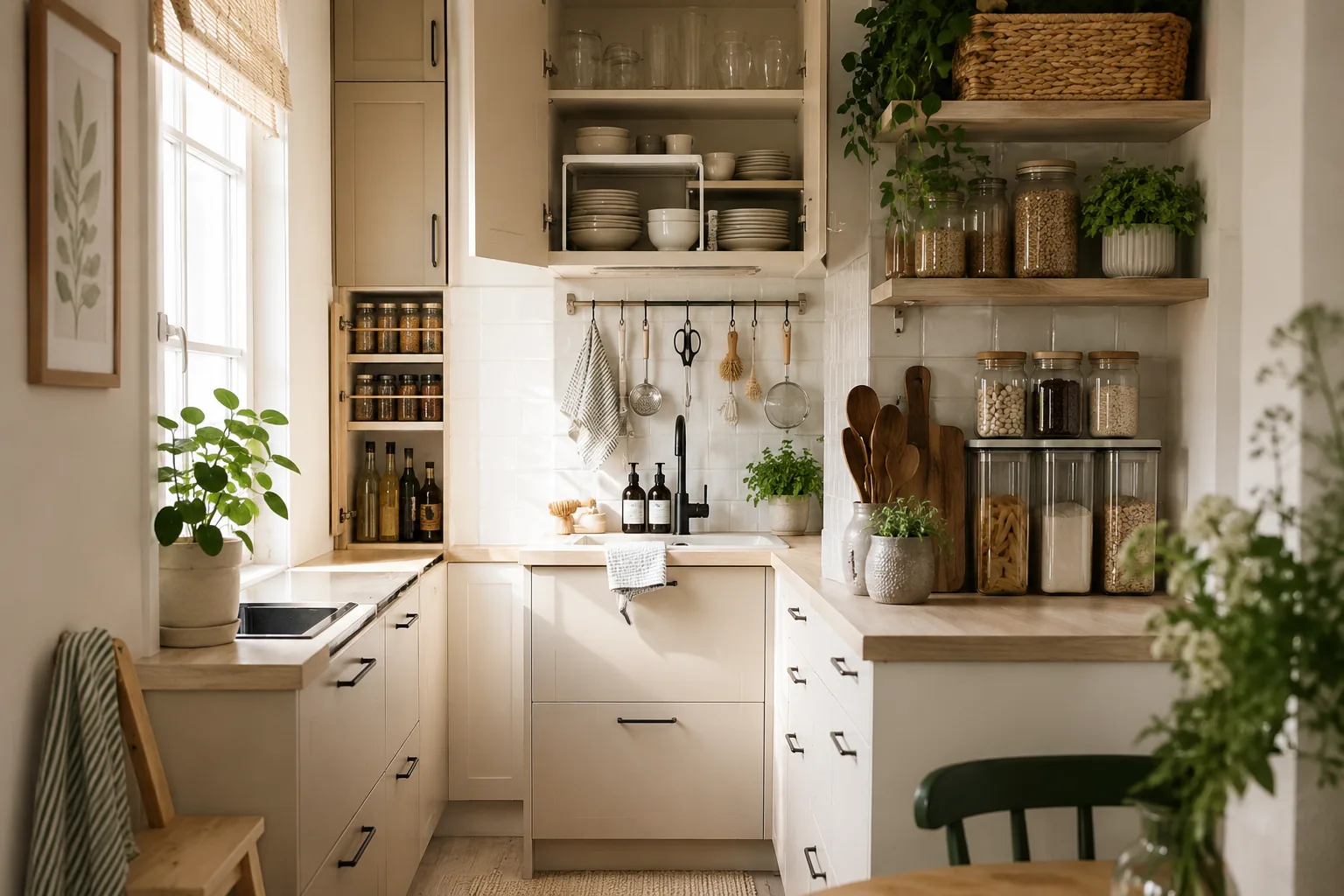
Set a boundary for kitchen overflow
Give pantry extras, reusable bags, or serving pieces one cabinet, cart, or shelf outside the main kitchen. Do not let the category spread into every available corner.
Why it works
A defined limit keeps food and kitchen tools from taking over shared living space.
Best for
Apartments with very little built-in kitchen storage.
Small-space tip
Review the overflow zone before grocery shopping or hosting.
Use portable kits for activities that move
Collect work supplies, crafts, exercise accessories, or grooming items in a handled container that can move to the place of use and return afterward.
Why it works
A portable home lets one table serve several activities without permanent clutter.
Best for
Dining tables and counters that double as work or hobby surfaces.
Small-space tip
Keep each kit light enough to move comfortably in one trip.
Reset one visible surface every day
Choose the table, counter, or bench that most affects how the apartment feels. Return stray items and leave that one surface ready for its next use.
Why it works
A small daily win protects the visual calm of a compact home.
Best for
Busy apartments where a full evening reset is unrealistic.
Small-space tip
Keep a temporary return basket nearby and empty it during a weekly review.