A small closet works better when its layout follows the length and frequency of the clothes you actually wear. Begin with visibility: if you cannot see an item or return it without rearranging a stack, its storage zone needs attention.
You do not need matching containers everywhere. A clear rail, a few stable shelf zones, and an easy place for outgoing clothes can improve the closet before you buy anything.
Start with what you actually wear
Move unworn, damaged, or wrong-size items out of the working rail before buying organizers. Keep uncertain pieces together for a short review period instead of returning them immediately.
Why it works
Reducing rail pressure makes every remaining item easier to see and remove.
Best for
Closets where hangers are packed too tightly to slide.
Small-space tip
Use a temporary box for decisions so editing does not stall the whole project.
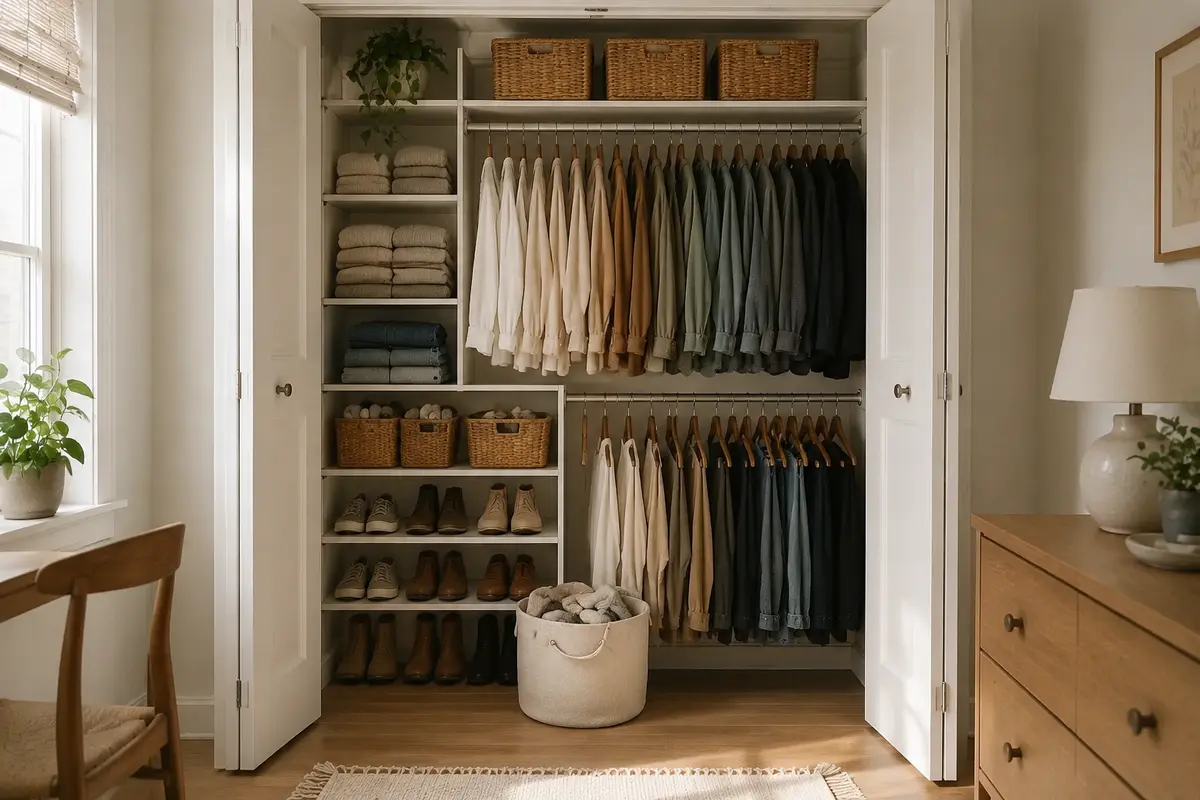
Group hanging clothes by length
Place shirts, trousers, dresses, and coats in sections according to how much vertical space they need. Use the open area below shorter garments for drawers or shelves.
Why it works
The layout responds to the real shape of the clothing and reveals usable space below.
Best for
Reach-in closets with one long rail.
Small-space tip
Measure the longest garment in each group before adding anything beneath it.
Add a second rail only where it fits
A lower rail can double hanging capacity beneath shirts and folded trousers. Keep one full-height section for dresses, coats, or other long pieces.
Why it works
Two levels use vertical space while preserving a place for long clothing.
Best for
Closets dominated by short-hanging everyday clothes.
Small-space tip
Check that lower garments will not drag on the floor or stored shoes.
Use the top shelf for contained categories
Store seasonal accessories, spare bedding, or occasional bags in a small number of stable boxes or baskets. Keep categories broad enough to remember.
Why it works
Containers prevent small items from disappearing into the deepest part of the shelf.
Best for
High shelves that are useful but not convenient for daily access.
Small-space tip
Choose containers you can lift safely and avoid stacking beyond easy reach.
Stand bags and folded items with dividers
Shelf dividers can keep bags, sweaters, or jeans in smaller upright groups. Leave enough room to remove one item without collapsing the rest.
Why it works
Boundaries stop soft items from leaning into one large unstable pile.
Best for
Wide shelves that repeatedly become messy stacks.
Small-space tip
Test the width of each section with books or boxes before buying dividers.
Keep everyday shoes visible
Place the pairs used most often on a low open shelf or rack and move occasional pairs higher or into labeled boxes. Avoid deep rows where the back pair disappears.
Why it works
Visible pairs are quicker to choose and easier to return.
Best for
Closets where shoes collect in a floor pile.
Small-space tip
Allow a little extra width for the largest pair rather than measuring only narrow shoes.
Use the door for shallow accessories
A slim organizer or carefully spaced hooks can hold belts, scarves, or small bags. Confirm that every item clears the shelves and clothing when the door closes.
Why it works
It creates an accessible accessory zone without using rail or shelf space.
Best for
Closets with hinged doors and shallow unused clearance.
Small-space tip
Close the door slowly during setup to test handles, shelves, and hanging items.
Keep an outgoing-clothes bag nearby
Give donations or repairs one contained place outside the main clothing zones. Empty it on a regular schedule instead of letting reviewed items return to the rail.
Why it works
A defined exit path makes decluttering an ongoing habit rather than a major event.
Best for
Anyone who notices unwanted items while getting dressed.
Small-space tip
Use a bag small enough to carry comfortably when it is full.